HOW AUTOPILOT WORKS

Your watering decisions, handled.

Autopilot is your AI irrigation planner. Built on plant knowledge and models trained across multiple sites, then refined with feedback from your yard, it decides for every zone whether to water, when, and for how long — so you don't have to become an irrigation expert.

Autopilot
Today's plan · 3 zones
No rain this week
Front beds
Low-water shrubs
Still moist. Next check tomorrow.
WAIT
Back lawn
Fescue · spray heads
Thu, 6:10 am · 18 min, in 3 cycles
WATER
Fruit trees
Citrus · drip
Planned for Sat, inside your window
WAIT
THE STARTING POINT

A good plan starts before the weather forecast.

Different plants need different care, and the same watering time delivers different amounts through different sprinklers or drip. Weather adjustments help — but weather alone can't tell whether the starting plan fits your plants and your watering system.

Adjusting a schedule is not the same as establishing the right one.
You shouldn't have to become an irrigation expert. Autopilot brings the plant, the system and the site into one plan.
Plants differ.
A lawn, a shrub bed and a fruit tree don't need the same water — and low-water doesn't mean no-water.
Watering systems differ.
Ten minutes of spray heads and ten minutes of drip put down very different amounts of water.
Yards differ.
Sun, shade, soil and season change how fast each zone dries — even with the same plants.
THE PLAN

Seven inputs. One plan for each zone.

Autopilot combines your setup, local evidence and the forecast to decide whether to water, when to schedule it and how long to run. Your allowed times and limits remain part of the plan.

Not just a reading. A plan for every zone.Seven planning inputs grouped into plant and system knowledge, local evidence, and planning conditions. Autopilot decides whether, when, and how long to water, then uses new local feedback.Plant & system knowledgeleafYour plantsPlant or plant-type recommendations,or your own settings.settingsYour watering systemSprinkler or drip parametersthat help turn need into runtime.Evidence from your yardsensorSoil moisture nowWhat the sensor measureswhere it is installed.clockPast wateringHow long the system ranand how moisture responded.curveLearned drying patternLearned from soil readingsand past watering events.Conditions & boundariescloudWeather aheadUpcoming conditions that maychange the next watering plan.calendarYour rulesAllowed watering days and times,plus your runtime limits.AUTOPILOTOne plan for each zoneWater or waitWhen to startHow long to runNew readings and watering responses help shape the next plan.
Not just a reading. A plan for every zone.Seven planning inputs grouped into plant and system knowledge, local evidence, and planning conditions. Autopilot decides whether, when, and how long to water, then uses new local feedback.Plant & system knowledgeleafYour plantsPlant or plant-type recommendations,or your own settings.settingsYour watering systemSprinkler or drip parametersthat help turn need into runtime.Evidence from your yardsensorSoil moisture nowWhat the sensor measureswhere it is installed.clockPast wateringHow long the system ranand how moisture responded.curveLearned drying patternLearned from soil readingsand past watering events.Conditions & boundariescloudWeather aheadUpcoming conditions that maychange the next watering plan.calendarYour rulesAllowed watering days and times,plus your runtime limits.YOUR AUTOPILOT PLANWater or wait · When · How longWithin the boundaries you choose.WHAT GOES INTO THE PLANNew readings help shape the next plan.

The drying pattern is learned from moisture readings and watering history — not from an extra sensor. A moisture trigger is one part of planning, not an unconditional command to open a valve.

HOW LONG TO RUN

Same water need. Different minutes.

Autopilot turns each zone's estimated water need into minutes using your sprinkler or drip parameters — then checks how the soil actually responded, and refines the next runtime.

Minutes to put down ½ inch
It depends on the heads in the zone
Spray heads
≈ 1.5 in/hr
20 min
Rotors
≈ 0.75 in/hr
40 min
Rotary nozzles
≈ 0.55 in/hr
55 min
Drip runs on emitter flow and spacing instead — Autopilot takes those into account too.
What happened informs what comes next
The sensor shows what the last run actually did
30% triggerplanned risemeasured riseWed6 am runThuFri30% triggerplanned risemeasured riseWed6 am runThuFri
Autopilot uses the measured response, watering-system parameters and current conditions to refine the next session's runtime.
One session can include time to soak

Autopilot schedules at most one planned watering session per zone per day. A session can include shorter watering cycles with soak breaks between them, so water has time to move into the soil before watering continues — useful on clay and slopes.

One planned session with multiple cyclesWater, soak, water, soak, water. Soak means sprinklers off. Several short cycles can be part of one daily planned watering session. Timing and cycle count are illustrative.ONE PLANNED WATERING SESSIONWaterSprinklers onSoakSprinklers offWaterSprinklers onSoakSprinklers offWaterSprinklers onOne daily task does not have to mean one uninterrupted run.
One planned session with multiple cyclesWater, soak, water, soak, water. Soak means sprinklers off. Several short cycles can be part of one daily planned watering session. Timing and cycle count are illustrative.WaterSprinklers onSoakSprinklers offWaterSprinklers onSoakSprinklers offWaterSprinklers on
AUTOPILOT IN ACTION

See how the plan responds.

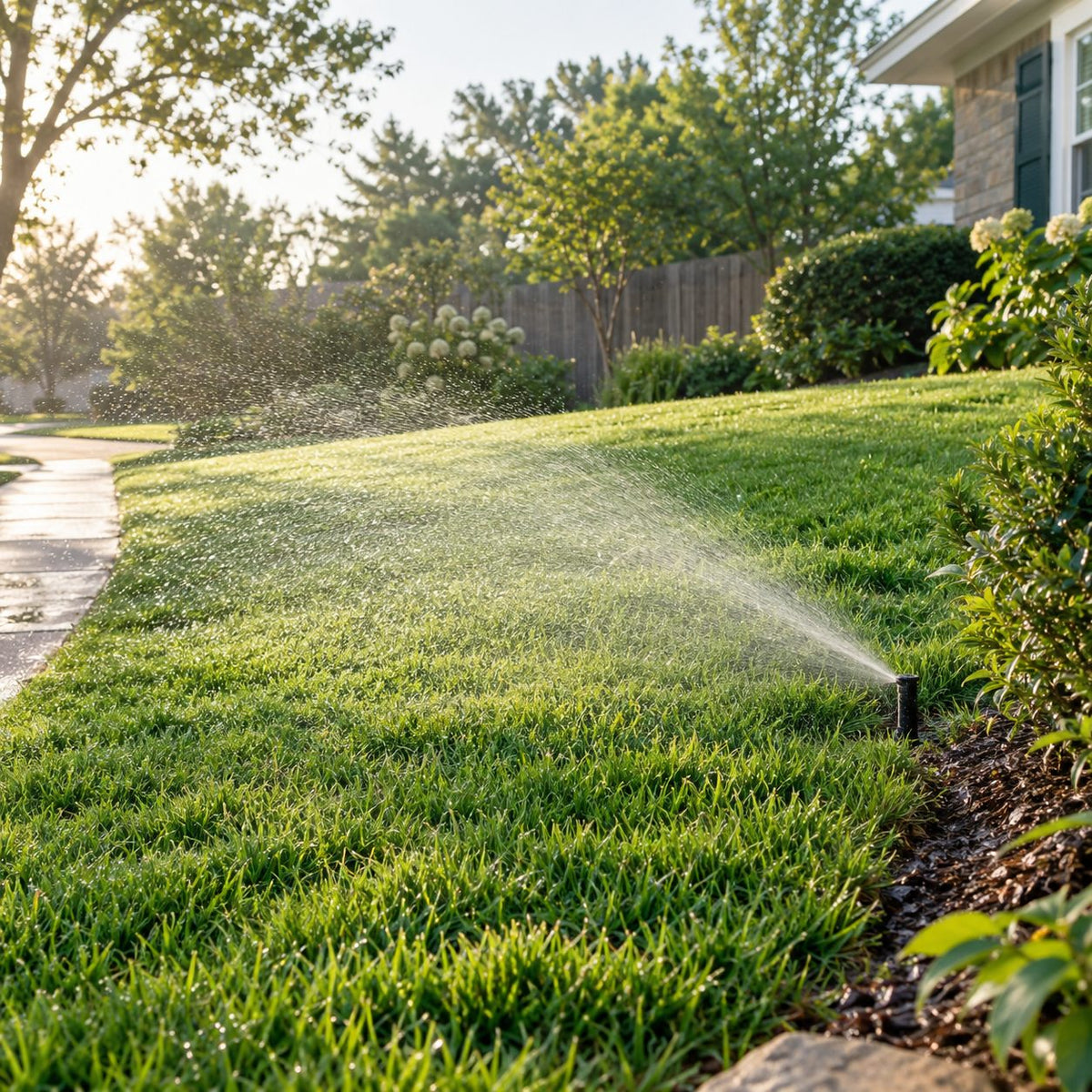
A sprinkler watering a sunny lawn beside garden beds
Sunny all week · no rain in the forecast
Same dry week. Different watering plans.

Rain is only one input. Through a dry California or Arizona summer, plant settings, soil readings and drying patterns still guide each zone's next watering — so two zones under the same sun get different plans.
Same dry week. Different watering plans.Hypothetical seven-day comparison: an established low-water shrub zone waters once and a lawn zone waters three times in the same dry week. Days are examples, not plant recommendations, regulatory guidance, measured results or universal schedules.SAME DRY WEEKNo rain forecastMonsunTuesunWedsunThusunFrisunSatsunSunsunEstablishedlow-water shrubsMoisture remains adequatefor longer. The plan waits.MonWaitTueWaitWedWaitThuWaitFriWaterSatWaitSunWaitOne watering task this weekLawn zoneDifferent plant settings.Different drying pattern.A different watering plan.MonWaterTueWaitWedWaitThuWaterFriWaitSatWaitSunWaterThree watering tasks this weekNOT JUST A RAIN SKIPPlant needs still matter. So does the water already in the soil.
Same dry week. Different watering plans.Hypothetical seven-day comparison: an established low-water shrub zone waters once and a lawn zone waters three times in the same dry week. Days are examples, not plant recommendations, regulatory guidance, measured results or universal schedules.NO RAIN IN THE FORECASTsunsunsunsunsunsunsunEstablished low-water shrubsOne watering task this weekMon—Tue—Wed—Thu—Fri✓Sat—Sun—✓ Water — WaitMoisture remains adequate for longer.The plan waits before watering.Lawn zoneThree watering tasks this weekMon✓Tue—Wed—Thu✓Fri—Sat—Sun✓✓ Water — WaitA different plant setting and dryingpattern lead to a different plan.NOT JUST A RAIN SKIPPlant needs still matter.So does the water already in the soil.
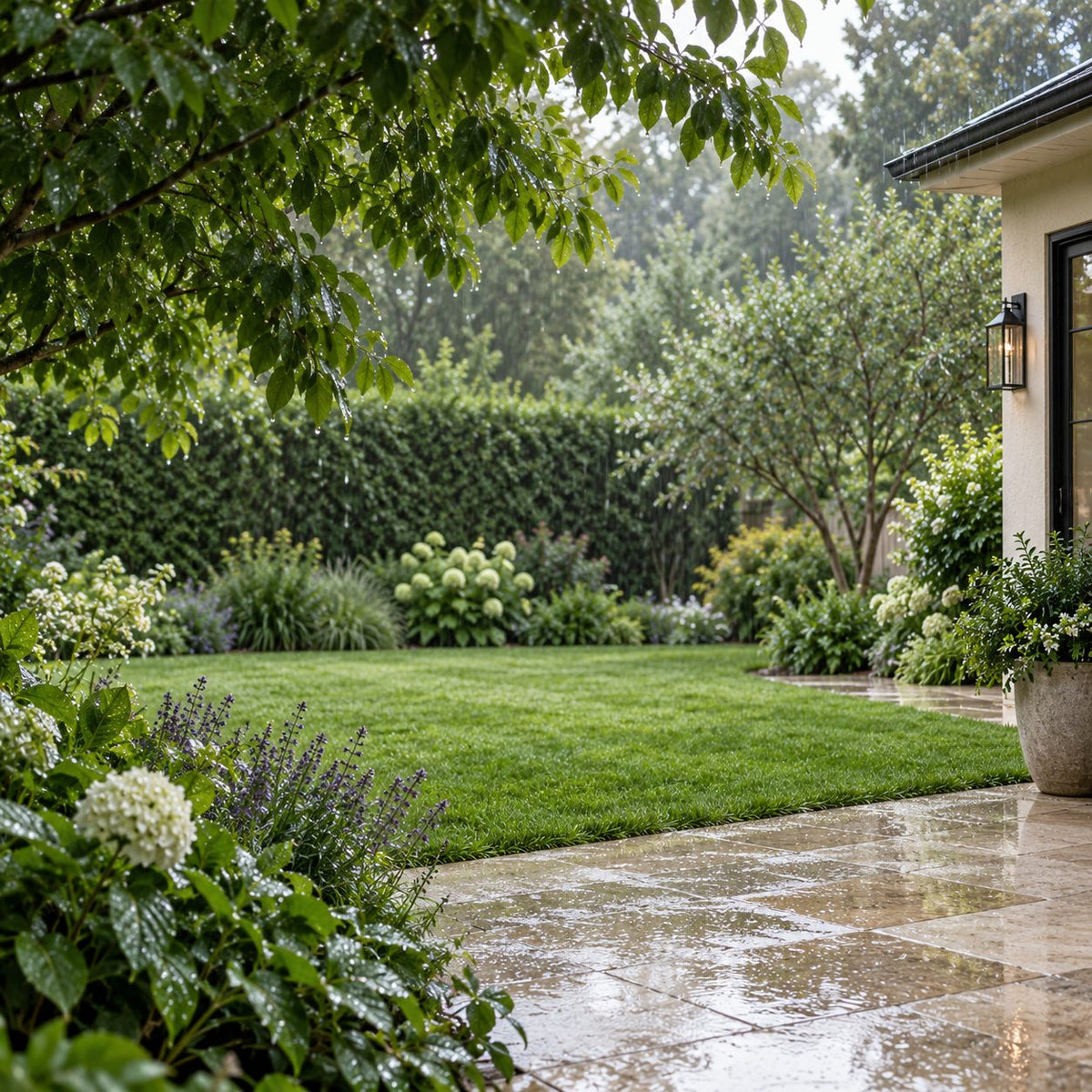
A wet patio and garden after rain
A week after the rain
Rain stopped. Watering can still wait.

The rain can stop long before your soil needs more water. Soil readings, the zone's drying pattern and plant settings estimate when watering may be needed again, and new readings and weather keep that estimate current — not a return to the old schedule.

After rain, watering can still waitA worked planning example, not actual customer data. Soil moisture rises after rain. On day seven the reading remains near 37 percent and watering waits. A dashed drying projection reaches this example zone's 30 percent trigger roughly five days later, assuming no additional water. New readings, weather and allowed watering times determine the actual plan.TODAY · DAY 7WAIT — the soil is still moist.Watering stays off. Monitoring continues.Soil moisture reading (%)30%40%50%60%0471014Days since rainAfter rainToday · 37%30% triggerProjected dryingLOOKING AHEADAbout 5more daysto this zone’swatering trigger.An estimate, not a fixedrestart date. New readingsand weather can move it.Before watering resumes1Recheck the soilUse the latest reading.2Check weather and your rulesUse an allowed watering window.3Update the planDecide when and how long.
After rain, watering can still waitA worked planning example, not actual customer data. Soil moisture rises after rain. On day seven the reading remains near 37 percent and watering waits. A dashed drying projection reaches this example zone's 30 percent trigger roughly five days later, assuming no additional water. New readings, weather and allowed watering times determine the actual plan.TODAY · DAY 7WAIT — still moistWatering stays off. Monitoring continues.Soil moisture reading (%)30%40%50%60%0471014Days since rainAfter rainToday · 37%30% triggerProjected dryingLOOKING AHEADAbout 5 more daysto this zone’s watering trigger.An estimate, not a fixed restart date.Before watering resumes1Recheck the soilUse the latest moisture reading.2Check weather and your rulesFit the run to an allowed watering window.3Update the planDecide when to start and how long to run.
PLANT SETUP

Start with your plants. We'll help with the settings.

Choose the starting point that works for you. Recommendations set up the zone; local readings and watering feedback help Autopilot plan what happens next. Where you can, group plants with similar needs on the same valve.

BY PLANT
Find a specific plant in a database of nearly 10,000 plants and start with its recommendations.
BY PLANT TYPE
Use recommendations for a plant category when you don't know the exact variety.
CUSTOM SETTINGS
Set your own parameters when you already know what you want.
Some established plants need far less irrigation than you'd expect.

Low-water doesn't mean no-water — but giving a low-water planting the lawn's routine can add water it does not need. Start with the plant, then account for the site, not the habit of watering every day.

SPECIALIZED AI FOR IRRIGATION

It starts with knowledge. It learns from your yard.

Plant knowledge and models trained across multiple sites provide the foundation. Your zone adds its own evidence — how watering changes the reading and how the soil dries afterward — and every new reading informs the next plan.

1 · THE FOUNDATION
Built for irrigation
Plant knowledge
Irrigation models
Models trained across multiple sites
2 · YOUR YARD
Adapted to your zone
Measured soil moisture
Watering and drying response
Forecast and your rules
How the drying model works

After each watering, Autopilot studies how the moisture reading falls, combines suitable event curves, and uses the current reading to estimate when the zone may reach its watering trigger. The forecast and your rules help turn that estimate into a scheduled task.

It learns your soil’s drying pattern.Consumer view of three suitable historical event models blended into a zone drying pattern. The illustrative model reading is 37.2563 percent at 24 hours; the 30 percent watering trigger is reached about 44.17 hours later without new water. The forecast is not a scheduled start time; rain, watering windows and runtime limits are also checked.1Past watering events2Your zone’s drying pattern3The next decisionPast event 1Past event 2Past event 3Each suitable event contributesto the zone’s learned pattern.One learned drying patternMoisture reading (%)50%40%30%0 h24 h48 h72 hToday37%Dashed: looking ahead30% triggerHours after the model peakLight: past-event models · Dark: the learned patternFROM TODAY’S READINGAbout 44 hoursWatering trigger: 30%An estimate—not a start timeThen check:Rain forecastAllowed watering timesRuntime limitsThe plan adapts asconditions change.Learns from suitable past events. Updates the plan as conditions change.
It learns your soil’s drying pattern.Consumer mobile view of three suitable event models and a learned drying curve. Today is about 37 percent. The mathematical example reaches the 30 percent trigger about 44 hours later if no new rain or irrigation occurs. The actual watering plan also checks rain, allowed watering times and runtime limits.1Past watering eventsPast event 1Past event 2Past event 3Suitable past events shape the learned pattern.2Your zone’s drying patternOne learned drying patternMoisture reading (%)50%40%30%Today37%30% trigger0 h24 h48 h72 hHours after the model peakLight: past models · Dark: learned patternDashed: looking ahead3The next decisionAbout 44 hoursWatering trigger: 30%Then check:Rain forecastAllowed watering timesRuntime limitsLearns from suitable past events.Updates as conditions change.

Each drying curve is modeled as m(t) = m₀ − k · ln(1 + t/τ). The main planning path reviews irrigation events from the past 20 days. It combines predictions from qualifying event curves, weighting them by their above-trigger observation spans. The latest candidate is temporarily excluded if fewer than 40 hours separate its moisture peak and the latest available reading. A simpler linear calculation is available when suitable curves are unavailable or recent event performance does not meet the model's rules.

The estimated time to a trigger assumes no new rain or irrigation; new readings, weather and scheduling constraints can change the plan. 30% is the trigger used in this example, not a refill target or a recommended setting for every plant and soil.

YOU'RE STILL IN CHARGE

You set the boundaries. Autopilot handles the planning.

Keep control of allowed watering times and runtime limits. Pause, skip or run a zone manually when you need to. Autopilot plans within the settings you choose.

Your boundaries hold
Allowed watering days and times, and runtime limits. Autopilot plans inside the settings you choose.
Pause, skip, run by hand
Guests on the lawn? Skip today. Testing a head? Run a zone from your phone.
See what's planned, and why
Every zone's next session and the reason behind it — the plant, the soil, the forecast.
Readings free. Planning is the subscription.
Soil moisture, weather skips, valve alerts and schedules cost nothing. Autopilot — the part that builds and adjusts the plan and watches for leaks — is the one thing you pay for.
DESIGNED TO REDUCE UNNECESSARY WATERING WHILE SUPPORTING HEALTHY PLANTS
Less water you didn't need
Sessions sized for the plant and the soil, not the hottest week of the year.
Roots that do better
Frequent shallow watering can keep roots shallow; soil that never dries out can starve them of air.
Less runoff
Give water more time to soak into the root zone instead of running down the driveway.
Autopilot: $60 a year. 30 days free.
Every zone on your controller, plus leak alerts.